
Glossary | Cobalt
Cobalt
At the intersection of battery production, geopolitics, and energy technologies, cobalt holds a uniquely strategic position.

Governments and manufacturers are prioritising transparent, traceable, and responsibly produced cobalt as part of broader decarbonisation and industrial strategies.
For participants across the battery supply chain, understanding cobalt's fundamentals and associated risks is essential. Awareness of sourcing challenges, technological applications, and emerging regulatory requirements supports more resilient procurement, investment, and sustainability planning in the evolving energy materials landscape.
What is Cobalt?
Definition and Properties
Cobalt is a chemical element with atomic number 27, belonging to the transition metal group of the periodic table. It is a hard, silvery‑grey metal with magnetic properties and strong resistance to heat and wear. These characteristics, together with its electrochemical stability, make cobalt an essential material for energy storage, high‑temperature alloys, and a wide range of industrial applications.
In lithium ion batteries, cobalt plays a critical role within the cathode—the positive electrode of the cell. Its inclusion stabilises the layered structure of the cathode material, enabling higher energy density and improved performance over multiple charge and discharge cycles. Cobalt also reduces the risk of thermal runaway—an overheating reaction that can occur if a cell becomes damaged or overcharged.
Supply Chain, Trade Forms, and Strategic Importance
Most cobalt is not mined as a primary product but recovered as a by‑product of copper and nickel operations. This link ties cobalt supply closely to the economics of those two base metals, often resulting in complex market dynamics and uneven production growth. The Democratic Republic of the Congo (DRC) dominates global mine output, while China leads in refining and conversion into battery‑ready compounds.
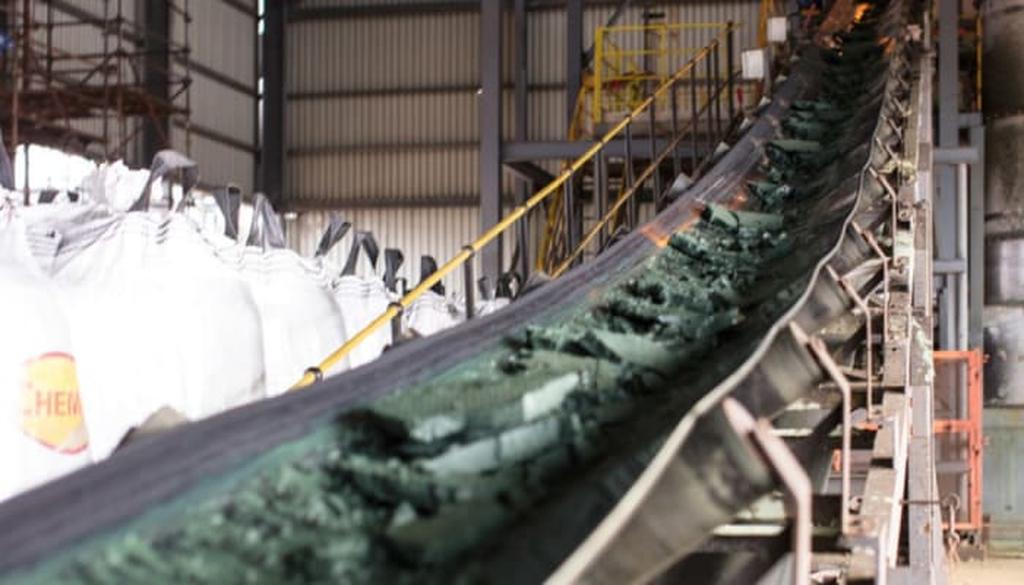
Cobalt is traded mainly as refined metal, cobalt sulphate, or cobalt hydroxide. The metal is used primarily in aerospace alloys and magnetic materials, while cobalt hydroxide and cobalt sulphate are key intermediates in the production of precursor materials for lithium ion battery cathodes. Cobalt hydroxide, in particular, is the main material exported from the DRC to China for refining into cobalt sulphate, which then feeds the global battery supply chain.
Cobalt Supply Chain: Concentration and Risks

Geographic Concentration of Cobalt Supply
The global cobalt supply chain is one of the most geographically concentrated of all critical minerals, with far‑reaching implications for supply security, ethics, and sustainability. Currently, 75% of mined cobalt originates from the Democratic Republic of the Congo (DRC), primarily in the Copperbelt region spanning southern DRC and northern Zambia. Here, cobalt is mainly recovered as a by‑product of copper extraction. Major industrial producers, including Glencore, China Molybdenum (CMOC), and ERG, operate large integrated mines that supply the global battery sector with cobalt hydroxide and other intermediate products.
Role and Challenges of Artisanal Mining (ASM)
Alongside industrial operations, artisanal and small‑scale mining (ASM) contributes ~2% of the DRC's total cobalt output. While ASM provides essential livelihoods, it is often associated with unsafe working conditions, child labour, and environmental impacts. These issues have drawn global scrutiny and prompted carmakers, battery manufacturers, and NGOs to develop traceability standards and responsible‑sourcing initiatives aimed at improving transparency across the cobalt value chain.
China’s Dominance in Cobalt Refining
After extraction, most Congolese cobalt is exported as semi‑processed hydroxide to China, which controls ~70% of global refining capacity. Chinese refiners convert this feedstock into cobalt sulphate and other battery‑grade chemicals, integrating them into cathode materials used across electric vehicle (EV) supply chains. This downstream dominance gives China a pivotal position in the battery industry, influencing global pricing and availability of refined cobalt products.
Indonesia as an Emerging Secondary Supplier
Indonesia has also emerged as a growing secondary source of cobalt, derived from its expanding nickel laterite operations. The country's integrated high‑pressure acid leach (HPAL) projects, primarily designed to produce nickel intermediates for battery precursors, also generate cobalt as a by‑product. Indonesia's share of global output is expected to rise steadily through the late 2020s as new plants come online, reducing—but not eliminating—dependence on Congolese supply. However, uncertainties remain around the environmental footprint of HPAL processing and their ability to meet growing global demand.
Efforts to Diversify Supply in Western Countries
Western countries retain limited cobalt mining and refining capability. Projects in Australia, Canada, Morocco, and Finland, as well as new refining capacity under development in Europe and North America, aim to diversify future supply. Nevertheless, given prevailing concentration risks and persistent demand growth, building diversified, traceable, and sustainable cobalt supply chains will remain a key strategic challenge over the decade ahead.
What is Cobalt Used for in Batteries?

Cobalt has long been valued in lithium ion batteries for its ability to stabilise cathode structures, improve energy density, and reduce the risk of thermal runaway. However, as electric vehicle (EV) production accelerates and sustainability pressures increase, manufacturers are steadily lowering cobalt intensity in battery chemistries to cut costs, mitigate supply risk, and address sourcing concerns.
Evolution of NMC Chemistries
The evolution of nickel manganese cobalt (NMC) chemistries illustrates this trend. Early NMC 111 batteries used equal parts of each metal, giving cobalt a substantial share of the cathode. Advances in material engineering have enabled producers to increase nickel content—progressing through NMC 622 and NMC 811 formulations—where higher nickel levels deliver greater energy density while cobalt content declines significantly. This enables longer vehicle ranges without compromising safety or performance, although it can raise challenges around stability and lifespan.
Trends in NCA Battery Development
Nickel cobalt aluminium (NCA) batteries, employed by several leading EV manufacturers, have followed a similar path. Modern variants contain only ~5%–10% cobalt, relying more heavily on nickel for energy density and efficiency. While cobalt continues to provide structural and thermal stability, ongoing research focuses on reducing its proportion further.
Rise of Cobalt-Free Alternatives (LFP)
At the same time, cobalt‑free alternatives such as lithium iron phosphate (LFP) are gaining market share, particularly in mass‑market EVs and stationary battery energy storage systems (BESS). LFP batteries offer lower cost and strong thermal safety, though with lower energy density. Their rapid adoption—especially in China—presents a long‑term competitive challenge to cobalt‑bearing cathodes, yet high‑performance applications continue to depend on cobalt's stabilising properties.
Shifting Demand from Consumer Electronics
Consumer electronics, once a major end‑use for cobalt, now represent a smaller share of total demand as EV production dominates. Premium smartphones and laptops, however, still rely on cobalt‑based cells for reliable, high‑capacity performance.
Future Outlook: Balancing Demand and Sustainability
Despite ongoing diversification, cobalt remains indispensable for premium and long‑range EVs. Through the 2030s, these applications are expected to sustain significant cobalt demand even as average intensity per kilowatt hour declines. The industry's challenge is to balance innovation, performance, and responsible sourcing—maintaining cobalt's critical role in advanced batteries while transitioning towards a more efficient and sustainable materials mix.
Cobalt in Batteries: Reducing Intensity


The Role of Cobalt and the Shift to Lower Intensity
Cobalt has long been valued in lithium ion batteries for its ability to stabilise cathode structures, improve energy density, and reduce the risk of thermal runaway. However, as electric vehicle (EV) production accelerates and sustainability pressures increase, manufacturers are steadily lowering cobalt intensity in battery chemistries to cut costs, mitigate supply risk, and address sourcing concerns.
Evolution of Battery Chemistries and Emerging Alternatives
The evolution of nickel manganese cobalt (NMC) chemistries illustrates this trend. Early NMC 111 batteries used equal parts of each metal, giving cobalt a substantial share of the cathode. Advances in material engineering have enabled producers to increase nickel content—progressing through NMC 622 and NMC 811 formulations—where higher nickel levels deliver greater energy density while cobalt content declines significantly. This enables longer vehicle ranges without compromising safety or performance, although it can raise challenges around stability and lifespan.
Nickel cobalt aluminium (NCA) batteries, employed by several leading EV manufacturers, have followed a similar path. Modern variants contain only ~5%–10% cobalt, relying more heavily on nickel for energy density and efficiency. While cobalt continues to provide structural and thermal stability, ongoing research focuses on reducing its proportion further.
At the same time, cobalt‑free alternatives such as lithium iron phosphate (LFP) are gaining market share, particularly in mass‑market EVs and stationary battery energy storage systems (BESS). LFP batteries offer lower cost and strong thermal safety, though with lower energy density. Their rapid adoption—especially in China—presents a long‑term competitive challenge to cobalt‑bearing cathodes, yet high‑performance applications continue to depend on cobalt's stabilising properties.
Demand Shifts and Long-Term Outlook
Consumer electronics, once a major end‑use for cobalt, now represent a smaller share of total demand as EV production dominates. Premium smartphones and laptops, however, still rely on cobalt‑based cells for reliable, high‑capacity performance.
Despite ongoing diversification, cobalt remains indispensable for premium and long‑range EVs. Through the 2030s, these applications are expected to sustain significant cobalt demand even as average intensity per kilowatt hour declines. The industry's challenge is to balance innovation, performance, and responsible sourcing—maintaining cobalt's critical role in advanced batteries while transitioning towards a more efficient and sustainable materials mix.
Cobalt Prices: Market Dynamics

Recent Price Volatility and Market Correction
Cobalt prices have seen pronounced volatility in recent years, reflecting shifting fundamentals across the electric vehicle (EV) and battery supply chains. After a strong rally in 2021–2022—when supply constraints and rapid EV growth pushed cobalt metal prices to nearly US$90,000/t—the market entered a severe correction through 2023–2025. Rapid output growth from the Democratic Republic of the Congo (DRC), together with weaker‑than‑expected EV demand and inventory build‑ups in China, caused prices to fall to less than one‑third of their 2022 peak.
Supply-Side Policies and Pricing Mechanisms
n 2025, the introduction of an export ban and subsequent quota system in the DRC provided renewed price support. The policy was designed to encourage downstream capacity development within the country but, given current refining limitations, has tightened global supply and driven a sharp price recovery.
Benchmark's IOSCO‑assured price assessments for cobalt hydroxide, metal, and sulphate serve as key market references. Cobalt hydroxide—the dominant export product from the DRC to China—remains the most sensitive to supply‑chain disruption, while cobalt sulphate prices closely follow short‑term changes in Chinese battery precursor demand.
Refined cobalt metal, used mainly in aerospace and industrial applications, acts as a barometer of broader market sentiment. Futures contracts based on Benchmark's cobalt hydroxide price are now traded on the Intercontinental Exchange (ICE), allowing participants to manage price exposure through hedging strategies.
Demand Trends and Future Market Outlook
Demand conditions are also evolving. The rapid adoption of cobalt‑free lithium iron phosphate (LFP) batteries has moderated demand growth for cobalt‑bearing chemistries, while fluctuations in EV sales and gigafactory utilisation rates have amplified short‑term volatility. In addition, limited transparency around inventory levels across the supply chain continues to obscure market fundamentals, intensifying price swings.
The combination of concentrated supply, evolving battery technologies, and policy shifts—particularly in the DRC—suggests cobalt will remain one of the most volatile and closely watched commodities in the energy transition.
Read More About Lithium

Lithium prices react to news of Chilean shutdown, but real supply impact may be limited
12th August 2025 | 2 min read Critical Minerals, Lithium
Benchmark launches new daily prices for lithium and cobalt
1st August 2025 | 2 min read Cobalt, Critical Minerals, Lithium

Rise of DLE will open up new sources of lithium supply this decade
23rd July 2024 | 4 min read Lithium
General FAQs
Everything you need to know about lithium and how it works. Can’t find an answer?
Contact UsWhat is lithium used for in batteries?
What is lithium used for in batteries?
Lithium is the cornerstone element in rechargeable lithium ion batteries that power electric vehicles (EVs), consumer electronics, and battery energy storage systems (BESS). Within a lithium ion cell, lithium ions move between the anode and cathode during charging and discharging, enabling efficient energy storage and release.
Lithium’s combination of low weight, high energy density, and strong electrochemical potential makes it well suited for compact, long‑lasting, and fast‑charging batteries. As electrification expands, ~88% of global lithium consumption now goes into battery production—a share expected to rise to ~94% by 2035.