
Glossary | Lithium
What is Lithium?
Understand lithium's supply chain. From brine pools in Chile's Atacama Desert to hard rock mines in Western Australia, lithium intelligence is critical for anyone buying, selling, or investing in this metal.

Lithium (Li, atomic number 3) is an alkali metal with exceptional electrochemical properties. It's the most electropositive and least dense metal, which makes it perfect for rechargeable batteries. When lithium ions move between a battery's anode and cathode, they store and release energy efficiently.
In nature, lithium never exists as a pure metal - it's too reactive. Instead, it's found in mineral deposits (primarily spodumene) or dissolved in underground brine reservoirs. After extraction, lithium is refined into battery-grade chemicals: lithium carbonate (Li₂CO₃) or lithium hydroxide (LiOH).
Purity Standards
Battery-grade lithium carbonate and hydroxide must meet purity standards above 99.5%. Lower-grade lithium goes into ceramics, glass, and lubricating greases - important markets, but minor compared to batteries. By 2030, batteries will account for over 95% of lithium demand.
Lithium Supply Chain: From Mine to Battery

Types of Extraction
The lithium supply chain begins at the extraction stage, where two principal routes dominate global production: hard-rock mining and brine extraction.
Hard-Rock Extraction
Hard-rock operations, primarily concentrated in Australia, account for ~70% of global lithium output. The main mineral, spodumene, is mined, crushed, and processed into a lithium concentrate, then shipped – mostly to China – for chemical conversion into lithium carbonate or lithium hydroxide. This route is relatively quick to scale, with straightforward logistics and predictable output, but it is energy intensive and more costly than brine-based methods. In addition to spodumene, lower-grade mica ores have increasingly been used as alternative feedstock, particularly in China in recent years.
Brine Extraction
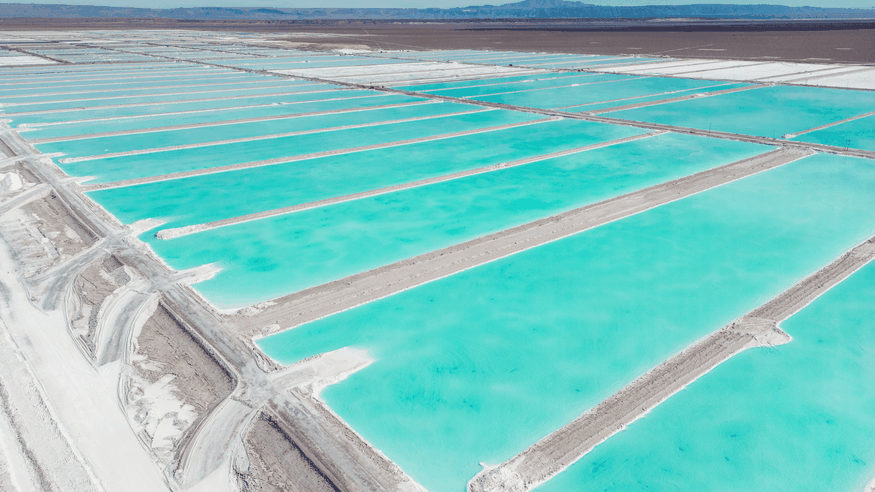
Brine extraction, by contrast, is centred in South America’s “Lithium Triangle”, spanning Chile, Argentina, and Bolivia. There is currently no commercial production from Bolivia despite significant lithium resources. In Chile and Argentina, lithium-rich brines are pumped from underground salt flats into large evaporation ponds. Over 12–18 months, solar evaporation concentrates the lithium before it undergoes chemical processing to produce marketable compounds. The method is significantly lower cost than mining but slower to operate.
Direct Lithium Extraction
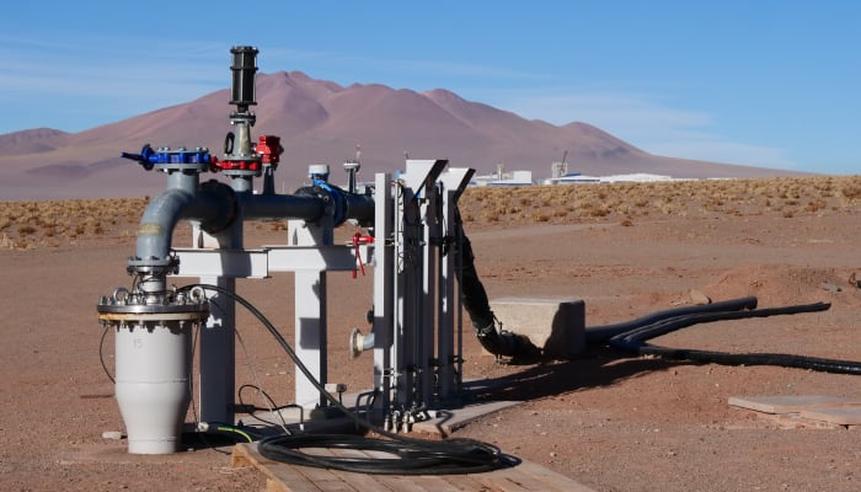
An increasingly discussed additional route – direct lithium extraction (DLE) – uses chemical or electrochemical techniques to selectively capture lithium ions from brine without lengthy evaporation. This process has potential to shorten production cycles, increase recovery rates, and reduce environmental impact, though commercial-scale adoption remains limited. Clay deposits, found in regions such as the US and Mexico, are also emerging as a potential resource, though extraction methods remain commercially unproven at scale.
Refinement & Manufacturing
After extraction, material enters the refining stage, where China currently dominates with ~70% of global lithium chemical production. In this stage, producers create lithium carbonate and lithium hydroxide, the main compounds used by battery manufacturers. Lithium iron phosphate (LFP) batteries typically use lithium carbonate, while nickel manganese cobalt (NMC) and nickel cobalt aluminium (NCA) chemistries rely on lithium hydroxide for higher energy performance in electric vehicles (EVs).
From the refinery, battery-grade lithium compounds are shipped to cathode manufacturers, then to cell producers and finally to automotive or energy storage system assemblers. Each EV battery contains ~8–12kg of lithium, depending on vehicle size and chemistry. The entire supply chain – from mining through refining, conversion, and manufacturing – forms an interconnected global network. Securing sustainable, diversified, and transparent lithium supply chains will be essential as industries scale to meet accelerating demand for electrification and energy storage.
What is Lithium Used for in Batteries?

Lithium is the key active material in lithium ion batteries that power electric vehicles, energy storage systems, and consumer electronics. Lithium ions move between the battery's anode and cathode during charging and discharging, storing and releasing energy. Each EV battery pack contains 8-10 kg of lithium carbonate equivalent (LCE). Batteries now account for over 85% of global lithium demand.
Lithium Applications: Where Does It Go?
Lithium’s role in the global economy has become dominated by energy storage. Around 88% of all lithium produced today is used in batteries, with this share forecast to rise to ~94% by 2035. This shift highlights lithium’s progression from a niche industrial material to a cornerstone of the clean energy transition.
EV's
The largest and most influential end-use lies in electric vehicle (EV) batteries. Demand from the automotive sector has risen as manufacturers advance electrification strategies and governments tighten emissions rules. Global EV sales are expected to reach ~22m units in 2025 and almost double to ~41m by 2030. Each battery pack contains between 8 and 12kg of lithium, depending on chemistry and vehicle size. The automotive sector now plays the defining role in shaping global lithium supply dynamics and investment priorities.
Energy Storage
Battery energy storage systems (BESS) form the fastest‑growing segment of demand. Grid‑scale installations are expanding rapidly as renewable generation—especially wind and solar—requires flexible storage to stabilise electricity networks. These systems rely on lithium ion technology for its balance of energy density, efficiency, and falling cost. BESS deployment is expected to multiply severalfold over the next decade, further strengthening the link between lithium and renewable power infrastructure.
Consumer Electronics
Consumer electronics, once the mainstay of lithium ion battery use, now represent a plateauing but stable market. Mobile phones, laptops, and other portable devices still consume significant volumes of lithium, but efficiency gains and market saturation have constrained growth.
Other Markets
Non‑battery applications, such as glass, ceramics, lubricants, polymers, greases, and pharmaceuticals, are declining as a share of total demand. Although these uses continue to depend on lithium’s heat resistance and chemical properties, they are increasingly overshadowed by surging demand from mobility and energy storage markets.
Where is lithium demand heading?
In summary, lithium demand is shifting decisively toward batteries, reflecting its central role in global decarbonisation. As EV and BESS deployment accelerates, lithium’s importance will rest not in the diversity of its uses but in its indispensability to technologies powering the sustainable energy future.
Lithium Prices: Market Dynamics


Spot Prices Versus Contract
Prices are typically shaped by both spot transactions and longer‑term contracts. Spot prices adjust rapidly to short‑term changes in supply and demand, while contract prices offer relative stability for producers and battery manufacturers. Interaction between these mechanisms can amplify volatility as downstream participants modify procurement strategies in line with shifting expectations.
Chinese Impact on Price
The lithium market has experienced extraordinary price swings in recent years, highlighting its sensitivity to supply fluctuations and evolving demand patterns.
Recent price movements have been influenced by production curtailments at some Chinese operations, variable utilisation rates at gigafactories, opaque inventory levels through the supply chain, and the timing of new supply entering the market.
China’s lithium carbonate prices reflect this volatility, rising from below US$10,000/t at the start of 2021 to a record high of ~US$80,000/t by the end of 2022, before falling to below US$9,000/t by mid‑2025. These rapid shifts underscore a market still in transition highly reactive to short‑term sentiment, policy, and production cycles across the battery supply chain.
Rising output from China and Africa, combined with expansions at Australian hard‑rock projects and Argentine brine operations, cooled prices through 2025, though uncertainty remains over sustainable production costs and future demand growth.
As the market matures, greater transparency, diversified sourcing, and clearer pricing benchmarks are expected to help moderate volatility. Nevertheless, lithium’s strategic importance to EVs and energy storage means price trends will remain a critical influence on investment and supply decisions through the coming decade
Lithium Market Outlook

Global Demand
Global lithium demand is projected to rise sharply over the next decade as electrification gathers pace across transport, energy storage, and industrial sectors. Consumption is expected to increase from ~1.3m tonnes of lithium carbonate equivalent (LCE) in 2025 to almost 4m tonnes by 2035. Meeting this growth will require major investment in new mines, brine projects, and refining capacity, as well as significant advances in processing technology and logistics infrastructure.
Global Supply
In the near term, the market is well supplied, with capacity expansions in Australia, South America, and Africa broadly keeping pace with rising demand. However, the market is forecast to tighten towards the end of the decade, driven by accelerating electric vehicle (EV) uptake and continued build‑out of battery energy storage systems (BESS). Without sustained project development, supply deficits could re‑emerge before the end of the decade, potentially placing renewed upward pressure on prices.
Geopolitical Influence
Geopolitical considerations are becoming increasingly significant. Policy initiatives in the US and EU aim to reduce reliance on Chinese processing and strengthen regional battery supply chains. While these measures are stimulating investment in Western lithium resources and conversion capacity, it is expected to take at least a decade to achieve material diversification, given long project lead times and permitting constraints.
The Role of Recycling
Recycling is set to play an expanding role in the future supply mix, providing secondary lithium from end‑of‑life EV and energy storage batteries. However, substantial volumes are unlikely to return to the market before the 2030s, as most batteries require eight to 10 years of use before reaching end‑of‑life. By 2040, recycled material is expected to account for more than 30% of global supply, helping to mitigate—but not replace—the need for new extraction.
Overall, the outlook points to sustained structural growth, underpinned by the global transition towards low‑carbon mobility and renewable energy systems.
Read More About Lithium

Lithium prices react to news of Chilean shutdown, but real supply impact may be limited
12th August 2025 | 2 min read Critical Minerals, Lithium
Benchmark launches new daily prices for lithium and cobalt
1st August 2025 | 2 min read Cobalt, Critical Minerals, Lithium
Rise of DLE will open up new sources of lithium supply this decade
23rd July 2024 | 4 min read Lithium
General FAQs
Everything you need to know about lithium and how it works. Can’t find an answer?
Contact UsWhat is lithium used for in batteries?
What is lithium used for in batteries?
Lithium is the cornerstone element in rechargeable lithium ion batteries that power electric vehicles (EVs), consumer electronics, and battery energy storage systems (BESS). Within a lithium ion cell, lithium ions move between the anode and cathode during charging and discharging, enabling efficient energy storage and release.
Lithium’s combination of low weight, high energy density, and strong electrochemical potential makes it well suited for compact, long‑lasting, and fast‑charging batteries. As electrification expands, ~88% of global lithium consumption now goes into battery production—a share expected to rise to ~94% by 2035.